Some environmental progress begins with a surprisingly simple idea: bring together the people who know a place, give them practical support, and help them repair the habitat they care about.
Across the United States, six new restoration projects are putting that idea into practice. Announced by NOAA Fisheries on October 5, the projects will involve recreational anglers and local partners in work ranging from restoring seagrass and coral habitat to removing marine debris and stabilizing eroding shorelines.
Six Projects, Nearly $430,000 in Restoration
NOAA Fisheries says the six projects will receive nearly $430,000 in total through the National Fish Habitat Partnership. The projects are relatively small and locally focused, but each tackles a specific habitat challenge while involving people who use and care about the waters being restored.
In Alaska, Trout Unlimited will work with anglers to manage aquatic invasive species and teach people how to prevent their spread. In northeast Florida, Matanzas Riverkeeper will organize recreational anglers to help remove marine debris from the Guana, Tolomato and Matanzas estuary.
Seagrass, Marshes and Coral Reefs
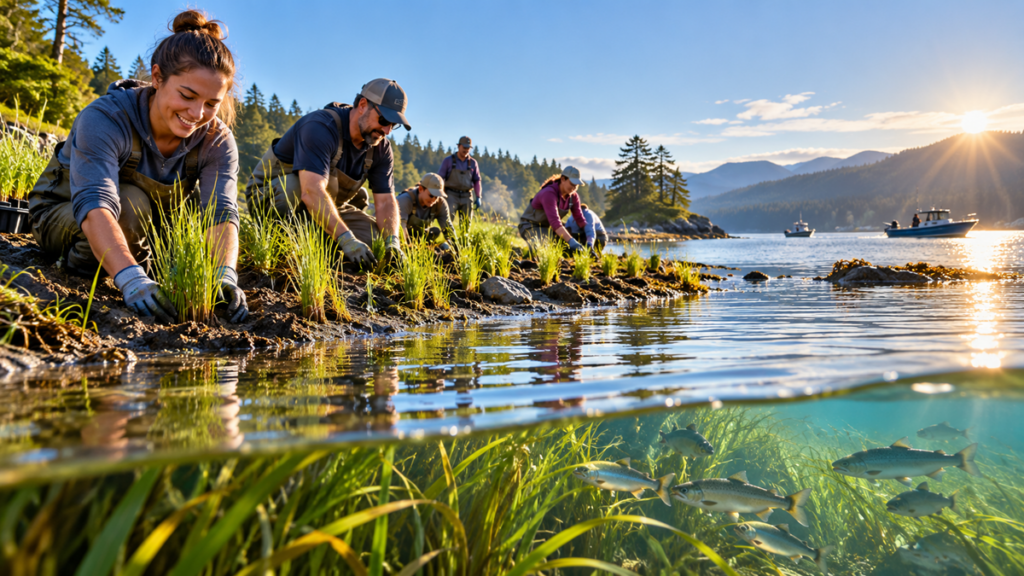
Other projects will focus directly on rebuilding habitat. The University of Florida will restore seagrass in the Big Bend Seagrass Aquatic Preserve while working with anglers on education and outreach.
At Tyson Point in North Carolina, the North Carolina Coastal Federation will work with local recreational anglers to stabilize an eroding shoreline and restore marsh habitat.
In West Oʻahu, Hawaiʻi, Kuleana Coral Restoration will restore and monitor corals while also supporting marine education and ocean stewardship. The project will include a family fishing tournament, connecting habitat restoration with the community that enjoys the coast.
Water Returns to a Hawaiʻi Bay After More Than 30 Years
A second Hawaiʻi project has an especially interesting dimension. Conservation International will work with anglers to document changes in fish and habitat in Maunalua Bay as freshwater flow is reestablished there for the first time in more than 30 years.
That monitoring matters because restoration is not only about doing the work. It is also about watching what happens afterward, learning from the results and understanding how ecosystems respond.
Why Healthy Habitat Matters
Fish need functioning rivers, wetlands, seagrass beds, reefs and shorelines to feed, grow and reproduce. NOAA’s habitat conservation work is built around the idea that healthier habitats can support stronger fish populations, wildlife and coastal communities.
These six projects also show another side of conservation: restoration does not always happen far away from everyday life. Anglers, families, volunteers, universities and local organizations can all become part of the work.
Small Projects Can Build Something Bigger
No single shoreline planting, debris cleanup or coral restoration project can repair an entire ecosystem. It would be misleading to suggest otherwise.
But practical local projects can restore individual habitats, build knowledge and strengthen the relationship between communities and the natural places around them. The National Fish Habitat Partnership itself connects 20 Fish Habitat Partnerships working collaboratively on habitat restoration around the country.
NewsPositive Takeaway
Environmental recovery is often built one place at a time: a cleaner estuary, a healthier marsh, a restored patch of seagrass, a coral reef given another chance.
These projects are modest in scale, but their strength is that people who know and use these waters are being invited to help restore them.
Good things are happening. We’re here to find them.