Meet the everyday community builders whose small acts of kindness, volunteering, connection and generosity are making the places around them better.
Every day, ordinary people are doing extraordinary things — often without headlines, recognition or applause.
It is easy to look at the news and come away believing that communities are becoming more divided, people are becoming less connected, and everyone is increasingly looking out only for themselves.
But there is another story unfolding at the same time.
It happens in community gardens and school halls. In apartment buildings, neighborhood cafés and local parks. It happens when someone checks on an elderly neighbor, gives a young person a chance, picks up litter nobody asked them to collect, or simply notices that another person needs help.
Most of these moments never become news.
Perhaps they should.
The Neighbor Who Notices
Strong communities often begin with something remarkably simple: people noticing one another.
Someone realizes that the older man two doors down hasn’t been outside for several days.
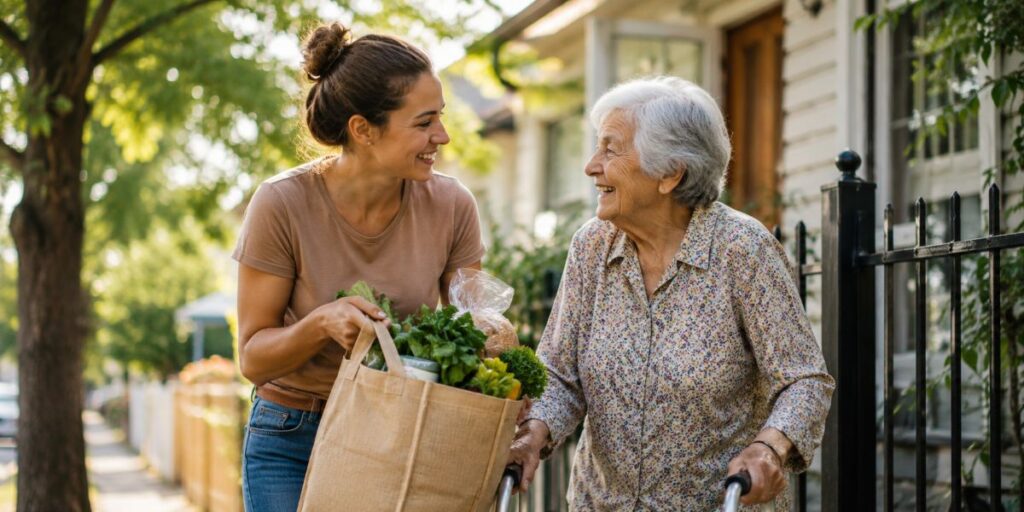
A neighbor brings groceries to a new parent who hasn’t had time to shop.
Someone takes a parcel inside for the family next door or helps carry a stroller up a flight of stairs.
None of these acts will change the world by themselves.
But they can change someone’s world for an afternoon.
And when those small acts become normal, a collection of houses starts becoming something more important: a community.
The People Giving Their Time
Time may be one of the most valuable things we can give another person.
Across communities, volunteers spend hours helping in food banks, animal shelters, youth groups, community centers and countless local organizations.
Others contribute less formally.
They coach a children’s sports team. They help someone learn a language. They repair something for a neighbor who cannot afford to replace it. They sit and listen to someone who is lonely.
There may be no photograph, certificate or public recognition afterward.
They simply go home.
And somewhere, another person’s day is a little better because they showed up.
The People Creating Places to Belong
Sometimes improving a community means creating a place where people can meet.
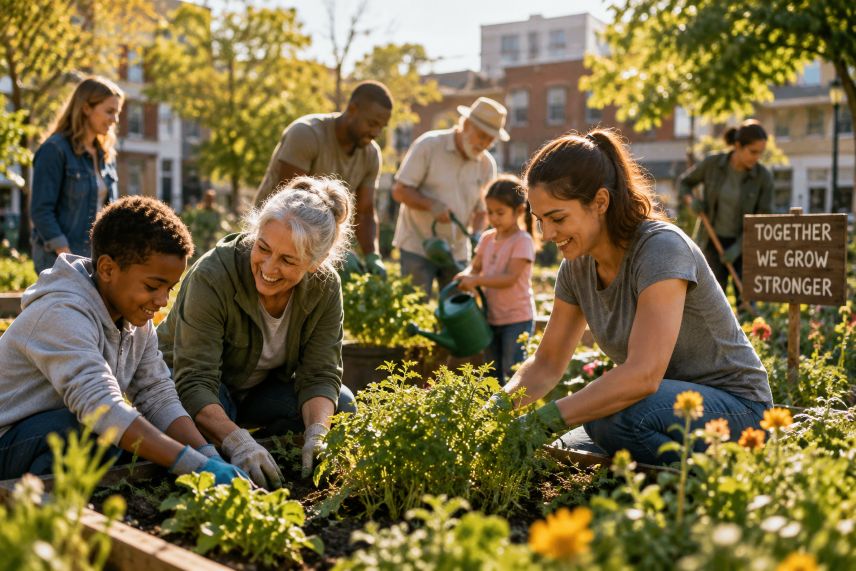
A neglected patch of land becomes a community garden.
A library hosts a weekly gathering.
Neighbors organize a street meal.
Parents create an informal group where children can play.
Someone starts a walking club and discovers that what people really needed wasn’t exercise — it was company.
These projects can look small from the outside.
Their real value is often much larger.
They create opportunities for people who might otherwise never speak to one another to meet, cooperate and eventually trust one another.
The People Helping the Next Generation
Some of the most important community builders are investing in people whose futures haven’t been written yet.
Teachers stay a little longer to encourage struggling students. Coaches teach resilience as well as sport. Mentors help young people imagine careers they had never considered possible.
Sometimes a young person needs resources.
Sometimes they need advice.
And sometimes they simply need one adult willing to say:
“I believe you can do this.”
We may never know how far that sentence travels through someone’s life.
The People Looking After the Place They Call Home
Not every community project needs an organization behind it.
Sometimes someone simply decides that something could be better.
They collect rubbish from a walking trail.
Plant flowers in a neglected corner.
Organize a neighborhood clean-up.
Repair a community noticeboard.
Create a book-sharing shelf.
Plant trees.
The physical improvement might be modest, but it sends an important message:
This place matters.
And perhaps even more importantly:
The people who live here matter.
The People Sharing What They Have
Generosity isn’t always about money.
People share tools, knowledge, food, transport, contacts, skills and opportunities.
One person knows how to repair bicycles.
Another understands computers.
Someone else can help with a job application.
Another has vegetables growing faster than their family could possibly eat them.
A healthy community contains thousands of things people can exchange that never need to appear on a balance sheet.
Often, the most useful question isn’t:
“What can I donate?”
It is:
“What do I already have that might help someone else?”
The People Who Start Conversations
In a world where disagreements can become amplified very quickly, simply talking to people outside our usual circles can be surprisingly powerful.
Communities become stronger when people are curious about one another.
When generations mix.
When newcomers are welcomed.
When someone introduces themselves instead of walking past.
When people with different backgrounds discover something they share.
We don’t have to agree about everything to care about the same street, school, park or town.
Sometimes community begins with nothing more complicated than:
“Hello.”
The People Who Keep Showing Up
Perhaps the most remarkable community builders aren’t the people responsible for one dramatic act.
They’re the ones who keep returning.
Week after week.
Year after year.
The volunteer who opens the community hall every Tuesday.
The person who checks on an elderly neighbor every morning.
The coach who has encouraged hundreds of children over twenty years.
The organizer who keeps arranging events even when only twelve people turn up.
Consistency rarely makes exciting headlines.
But consistency builds institutions, relationships and trust.
Good Things Are Often Quiet
There is an understandable reason we hear more about disasters, conflicts and failures than the neighbor who delivered someone’s groceries.
Problems demand attention.
Kindness usually doesn’t.
But that creates a distorted picture of the world around us.
For every dramatic event that captures thousands of headlines, countless quieter moments of cooperation continue happening largely unnoticed.
People help strangers.
Neighbors become friends.
Volunteers turn up.
Teachers encourage.
Communities rebuild.
Someone decides that instead of waiting for somebody else to improve something, they’ll begin themselves.
You Don’t Have to Change the World
Perhaps that’s the most encouraging part.
Making a difference doesn’t necessarily require starting a foundation, becoming famous or having enormous resources.
It can begin much closer to home.
Learn someone’s name.
Check on a neighbor.
Volunteer for an afternoon.
Support a local project.
Share something you know.
Pick up something someone else dropped.
Invite someone who might otherwise be alone.
Because communities aren’t really built by buildings, councils or postal codes.
They’re built by people.
And all around us, quietly and without much recognition, people are still building them.