
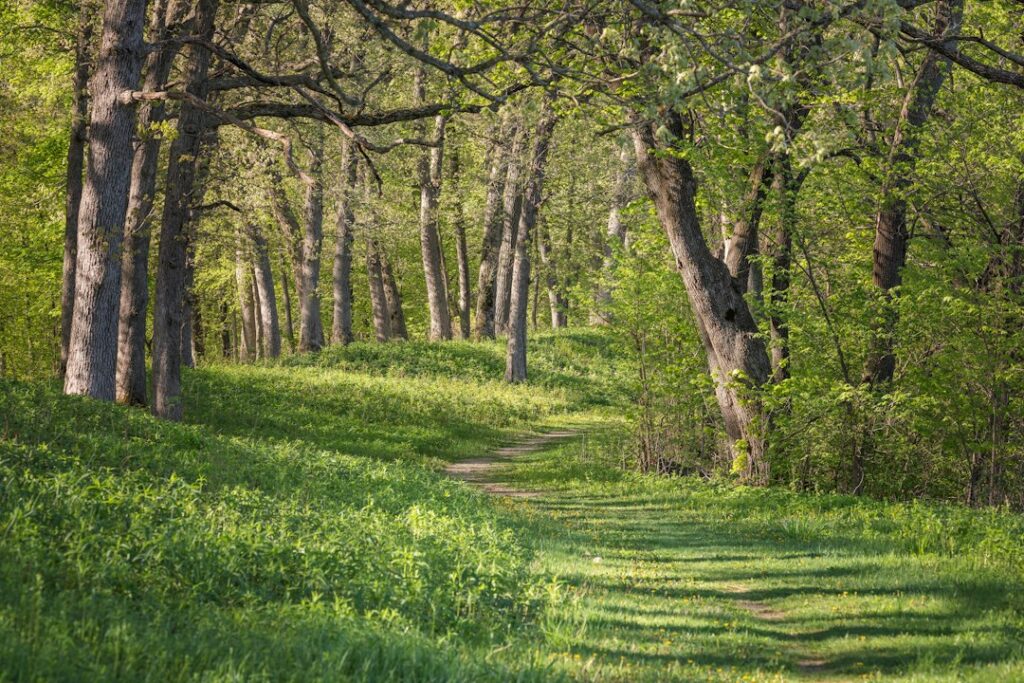
A new trail in Milwaukee invites visitors who are blind or visually impaired to explore a state forest through touch, sound and Braille — a reminder that enjoying nature should not depend on sight alone.
MILWAUKEE, WISCONSIN — A forest can be experienced in many ways: the rustling of leaves, the texture of bark, the sound of birds and the changing air beneath the trees. At Havenwoods State Forest, a new trail is helping make those experiences more accessible.
On October 17, 2026, the Wisconsin Department of Natural Resources (DNR) celebrated the opening of its new Braille Trail, a loop approximately one-third of a mile long with audio and tactile interpretation alongside text in Unified English Braille.
A Trail Designed for More Ways of Experiencing Nature
The trail’s interpretive elements introduce visitors to Havenwoods’ history, habitats, plants and wildlife. Instead of relying exclusively on conventional printed signs, it offers several ways to access information while exploring the forest.
According to the DNR, a limited number of white canes are available to borrow for use on the trail, and the nature center offers information and resources for visitors. Visitors planning a trip should confirm current availability and accessibility conditions with staff.
More Than a Ribbon Cutting
The October 17 opening celebration brought together park staff and organizations providing services and opportunities for people who are blind or visually impaired. Visitors were invited to interactive activities and a ribbon cutting.
Developing the trail involved community partners and advisers. The DNR credits support from Friends of Havenwoods State Forest, the Natural Resources Foundation of Wisconsin, the Greater Milwaukee Foundation and other funding partners, as well as consultation from disability, museum and educational organizations.
Accessibility Means Having Choices
There is no single way to experience a forest. Some visitors depend on visual maps and signs; others benefit from spoken interpretation, tactile features or Braille. Offering multiple options can help visitors engage with information in ways that work for them.
The new trail is a welcome example of inclusive design, although no one feature makes an outdoor environment universally accessible to every person. Trail surfaces, weather conditions, transportation and individual access needs can still affect visits.
Nature in the Heart of Milwaukee
Havenwoods State Forest is an urban natural area in Milwaukee, with trails, educational programming and a nature center. The Braille Trail adds a new way of exploring its landscape and history.
The Wisconsin DNR lists the Braille Trail as a roughly 0.3-mile loop and provides up-to-date visitor information on its recreation page. Those planning a visit can also consult the nature center page for opening hours and contact details.
A Small Path With a Larger Message
The trail may be only one-third of a mile long, but its significance extends beyond its distance. It reflects a commitment to making public natural spaces easier to discover and enjoy through a wider range of experiences.
For NewsPositive, this is the kind of practical progress worth celebrating: people and organizations working together to reduce barriers and make something valuable — a walk in the forest — more welcoming.
The outdoors belongs to everyone. Projects like the Havenwoods Braille Trail help bring that principle closer to reality.
Sources: Wisconsin DNR: Braille Trail opening announcement (October 8, 2026); Braille Trail ribbon-cutting event; Havenwoods State Forest recreation information.
Editorial note: This report is based on official Wisconsin DNR information and local reporting; it does not represent an on-site visit or independent accessibility audit.