
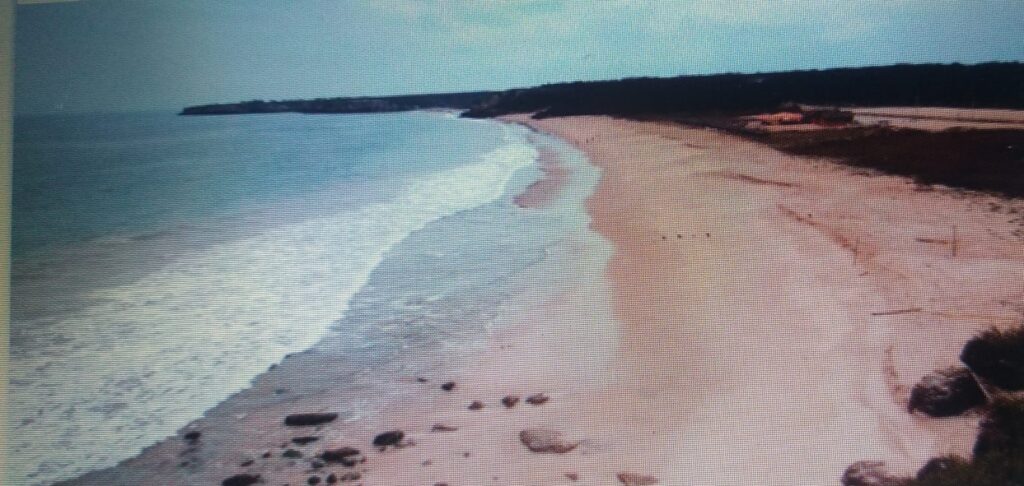
On Ecuador’s Pacific coast, children aged seven to twelve helped transform a local pollution problem into a citizen-science project. Their efforts show how environmental education can become measurable community action.
AYANGUE, ECUADOR — A cigarette butt may look insignificant against the vast Pacific Ocean. But thousands of discarded filters accumulating along a beach can create a persistent environmental problem.
In the coastal community of Ayangue, in Ecuador’s Santa Elena province, children became part of the solution. Through an environmental initiative combining science, creativity and community participation, young volunteers helped tackle cigarette-butt pollution on their local beach.
According to a study published in Ocean & Coastal Management in 2026, monitoring recorded a 53.2% reduction in collected cigarette butts. Over two years, the initiative also prevented an estimated 6,821 cigarette butts from reaching the ocean.
Small Volunteers, an Important Mission
Ayangue is known for its beach and connection to the Pacific Ocean. Like many seaside destinations, it faces the challenge of waste left by beach users. Cigarette filters commonly contain cellulose acetate, a plastic-based material that can persist in the environment.
The Ecuadorian nonprofit Fundación Amiguitos del Océano worked with local children on environmental education and conservation activities through Ecoclub Ayangue Limpio, which encourages ocean literacy, leadership and community involvement among children aged seven to twelve.
When Children Become Citizen Scientists
The initiative, Monitoring of Cigarette Butts Ayangue Limpio, was developed collaboratively by Fundación Amiguitos del Océano, Universidad del Pacífico-Ecuador and researchers connected with the Proplayas network.
Instead of treating children only as an audience for environmental lessons, the project invited them to contribute directly through workshops, beach monitoring, environmental projects and artistic activities. By observing litter and communicating what they learned, the children connected scientific observation with everyday decisions made on the beach.
Encouraging Results for Ayangue Beach
Researchers evaluated environmental, scientific and educational outcomes. They reported a 53.2% reduction in cigarette butts collected during monitoring and an estimated 6,821 cigarette butts prevented from reaching the ocean over two years.
Those findings matter because discarded cigarette filters can be easily overlooked. A single filter seems small, but repeated littering creates persistent contamination, particularly in places used for recreation, fishing and tourism.
The research describes a specific local project. Its results do not mean the same reduction would automatically occur on other beaches. Nevertheless, they show encouraging, measured progress.
The Message Travelled Beyond the Beach
One of the most inspiring outcomes was educational: the study reports that 85.7% of participating children shared information connected to the project. Their environmental messages travelled beyond workshops and into wider social circles.
That matters because environmental protection is not only about removing existing litter; it is also about changing habits and awareness. Young participants can help start conversations within families and communities.
A Community Working Together
The children were central to the initiative, but they were supported by educators, researchers, nonprofit organizers and members of the Ayangue community. That wider collaboration helped turn environmental lessons into practical monitoring and communication.
The project became more than a single beach cleanup: it demonstrated how education, research and local participation can work together.
Why This Matters Beyond Ecuador
Communities worldwide struggle with waste on beaches, riversides and public spaces. Long-term progress depends on prevention, public awareness and sustained cooperation as well as cleanups.
The Ayangue initiative suggests that children can play a meaningful role when adults give them appropriate opportunities and support. Young people need not wait until adulthood to contribute to the places they care about.
A Small Beach, a Powerful Example
Ocean pollution is an enormous challenge, and no single local initiative can solve it. But the children of Ayangue learned about a problem, helped monitor it, shared what they discovered and took part in a project that produced encouraging measurable results.
At NewsPositive, these are the stories worth sharing: real people collaborating on practical solutions, with evidence showing why their work matters.
Sometimes meaningful change begins with children who care about their community — and adults who help them turn concern into action.
Research source: Almonacil Fernández, B., et al. (2026). Co-creating solutions through citizen science: Children reduce cigarette butt contamination on Ayangue beach (Ecuador). Ocean & Coastal Management, 276, 108132. Read the scientific paper (DOI).
Image credit: Renato Apolinario, Playa Rosada — Ayangue, CC BY-SA 4.0. Landscape photograph from the Ayangue area; it does not depict the child participants or the project’s monitoring activities. Image used without modification.
Editorial note: This report describes a research study and activities conducted before October 2026. The reported reductions are local project findings, not national statistics.


A very enjoyable article with a clear sense of direction. I especially liked how you kept the discussion focused throughout the piece.