For families living in the drylands of Africa’s Sahel, restoring a landscape is about more than making it greener. Healthier soil and vegetation can help support farming, grazing and the livelihoods built around them. That is the hope behind a newly announced investment in Africa’s Great Green Wall.
On October 6, the UN Environment Programme (UNEP) announced a US$78 million grant-backed programme involving nine African countries. The initiative aims to restore more than 270,000 hectares of degraded land and improve livelihoods for five million people, more than half of them women. These are targets for future work—not results that have already been delivered.
More than a line of trees
Despite its name, the Great Green Wall is not simply a continuous wall of trees. Launched under the African Union in 2007, it is an African-led effort to restore damaged landscapes and strengthen communities across the Sahel and surrounding drylands. Different places need different solutions: protecting natural regrowth, improving farmland, managing grazing areas and restoring wetlands can all be part of the picture.
For local people, the important question is whether restoration leads to more resilient land and practical opportunities. The new programme is designed to connect environmental recovery with agriculture, pastoralism and rural incomes.
Nine countries working across landscapes
The participating countries are Burkina Faso, Chad, Ethiopia, the Gambia, Mali, Mauritania, Niger, Nigeria and Senegal. UNEP will implement eight of the programme’s ten projects and coordinate regional work. The West African Development Bank will implement the other two.
The plans differ by location. UNEP says Mali is targeting regeneration across 150,000 hectares in the Kayes, Nioro and Ségou regions, while Niger plans to rehabilitate 55,000 hectares of farmland, woodland and grazing areas. In Ethiopia, plans include restoring 22,000 hectares of degraded land and improving the management of 40,000 hectares of natural forest.
Elsewhere, projects emphasize people as well as land. In the Gambia, proposed wetland and forest-corridor restoration is intended to benefit nearly 800,000 people. Initiatives in Mauritania and Nigeria’s Kebbi State include a focus on women-led enterprises.
Funding that can turn plans into work
The Global Environment Facility (GEF) is providing the US$78 million commitment. UNEP says additional co-financing from international partners brings total programme resources to more than US$500 million.
That larger figure should not be confused with a new US$500 million GEF grant: it includes other sources of financing. The initiative also builds on restoration efforts already pursued by participating countries and previous work identifying degraded areas where restoration may be effective.
Reasons for hope—and reasons to measure progress
Restoration in a region facing drought, land degradation and overlapping economic pressures is challenging. Funding alone cannot guarantee healthy soils, durable vegetation or better incomes. Implementation will require local participation, long-term management and transparent monitoring.
But the announcement marks a concrete commitment to collaborate across borders while adapting the work to local needs. If the programme meets its goals, its benefits could be felt not only in landscapes but also in households, farms and communities.
For NewsPositive, that is the meaningful possibility in this story: a healthier environment and a more secure future can be part of the same effort.
Sources and what is established
Confirmed: UNEP announced the new funding commitment, participating governments, project responsibilities and stated targets on October 6, 2026. Not yet established: that 270,000 hectares have already been restored or that five million livelihoods have already improved.
Primary source: UN Environment Programme, October 6, 2026.
Background: UNEP explains the Great Green Wall’s broader goals.
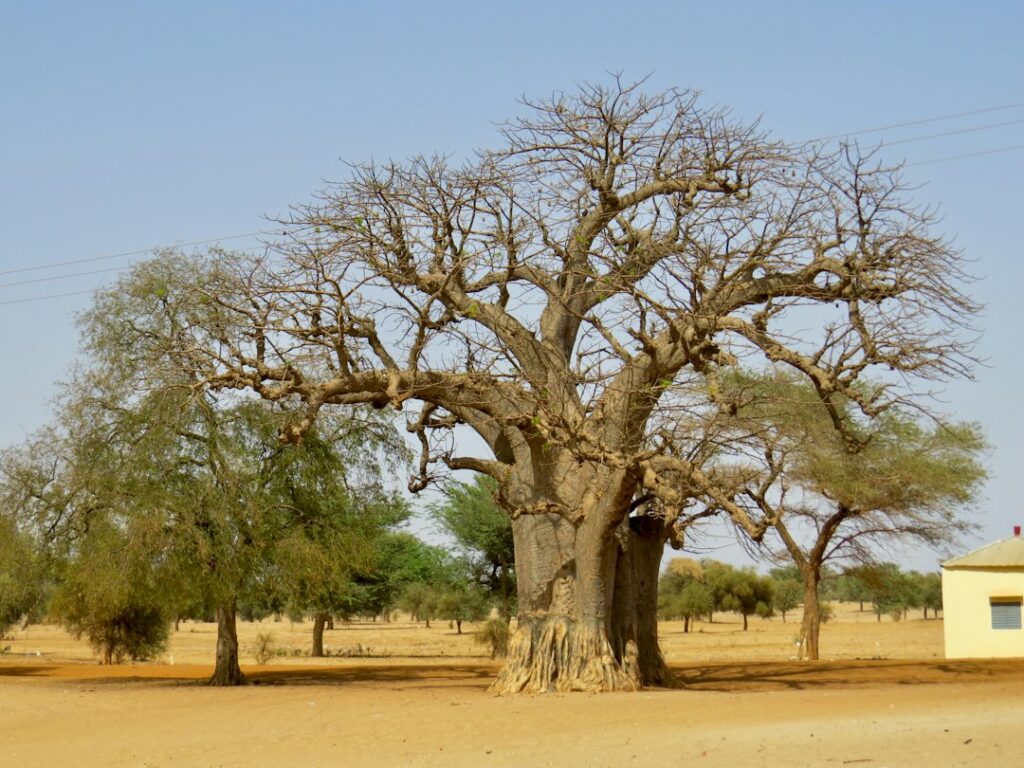
Photo: Senegal landscape photographed by E. Diop / Unsplash. Illustrative image; not a photograph of this specific restoration programme.
Good things are happening. We’re here to find them.