Discover what research says about nature and mental well-being, from stress relief and movement to green spaces, water and human connection.
There is something wonderfully simple about stepping outside.
A walk beneath trees. Sitting beside a lake. Listening to birds. Feeling sunlight through leaves. Watching clouds move across the sky.
For many people, these moments simply feel good.
Science increasingly suggests there may be something behind that feeling.
Research has linked exposure to green and blue spaces with better mental well-being, relaxation, opportunities for physical activity and social connection. The World Health Organization says natural environments have been associated with benefits including reduced stress, improved mood and enhanced cognitive function.
And you don’t necessarily need a wilderness expedition to experience nature.
Sometimes a neighbourhood park is enough.
1. Nature May Help Turn Down the Volume on Stress
Modern life can keep our attention switched on almost continuously.
Messages arrive.
Notifications appear.
Traffic moves.
Screens glow.
Work follows us home.
Natural environments offer something different.
A systematic review examining nature exposure and stress found lower physiological indicators of stress across the studies measuring them, while most studies measuring perceived stress also reported lower levels with greater nature exposure.
WHO similarly identifies psychological relaxation and stress alleviation as pathways through which urban green spaces may support health.
That doesn’t mean walking through a park makes life’s problems disappear.
But it may give the mind somewhere quieter to encounter them.
2. Green Spaces Give Your Mind Somewhere Else to Look
Think about how much of an ordinary day is spent concentrating.
Reading.
Driving.
Answering messages.
Making decisions.
Switching between browser tabs.
Trying to remember what you were doing before the last interruption.
Nature changes the sensory environment.
Leaves move.
Water ripples.
Birds appear and disappear.
Clouds drift.
Your attention is still engaged, but often in a gentler way.
WHO notes that exposure to natural environments has been linked with enhanced cognitive function as well as improved mood and reduced stress.
Perhaps that’s one reason a short walk outside can sometimes make returning to a difficult task feel easier.
3. Nature Encourages Us to Move
There’s another explanation for some of nature’s benefits that is refreshingly straightforward.
When we’re outside, we often move.
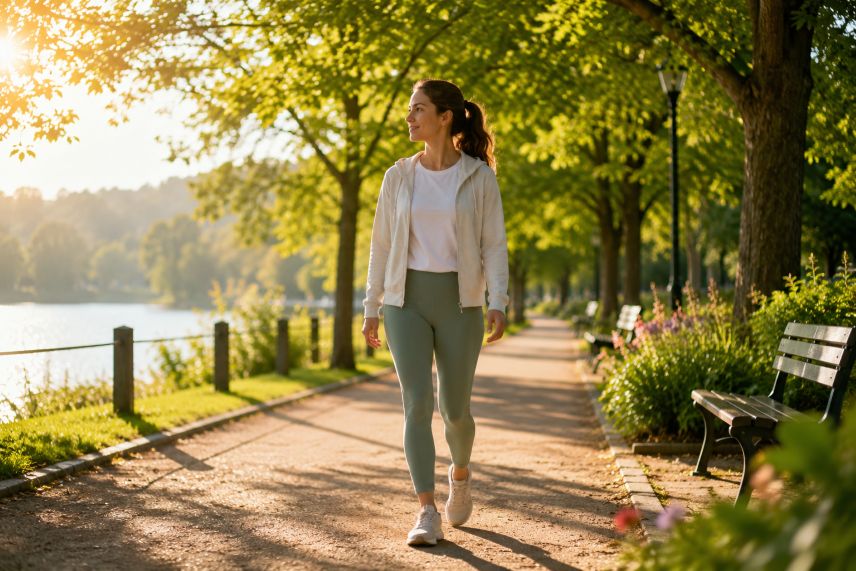
We walk through the park.
Cycle along a river.
Hike through a forest.
Play with the dog.
Garden.
Take the children outside.
WHO identifies increased opportunities for physical activity as one of the important ways green spaces can benefit health. Parks and gardens can also provide places for recreation, relaxation and social interaction.
Nature and exercise therefore aren’t necessarily separate wellness strategies.
They often happen together.
4. Water May Matter Too
Nature doesn’t have to be green.
It can also be blue.
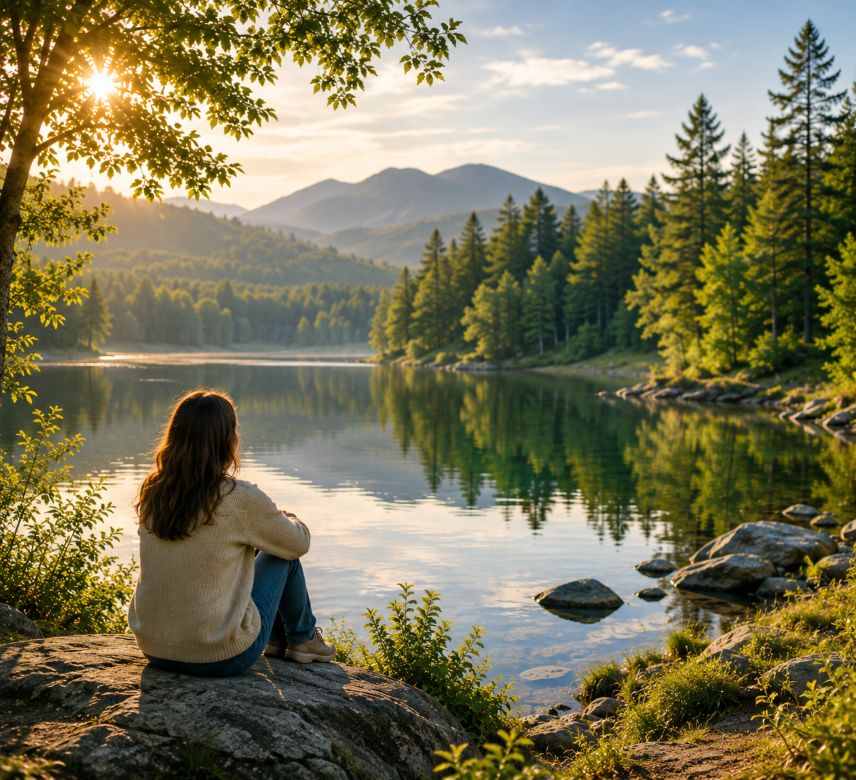
Lakes, rivers, coastlines and other waterside environments are increasingly studied alongside forests, parks and other green spaces.
WHO’s review of research into green and blue spaces found an overall positive relationship between these environments and mental health. However, it also noted that evidence specifically comparing different kinds of blue spaces was limited, making sweeping conclusions difficult.
That’s an important distinction.
Science doesn’t currently tell us that everyone needs exactly 17 minutes beside a lake or that an ocean is automatically better than a city park.
What it does suggest is that access to natural environments—including water—can form part of healthier places to live.
5. Nature Can Create Space for Human Connection
A park isn’t only a collection of trees.
It’s also somewhere people meet.
Parents talk while children play.
Friends walk together.
Neighbours encounter one another.
Families picnic.
Older people sit outside.
Dog owners somehow learn the names of every neighbourhood dog before learning the owners’ names.
WHO identifies social interaction and cohesion among the pathways through which green and blue spaces can contribute to health and well-being.
That makes nature interesting because its benefits may not come from one mechanism.
A trip to the park can simultaneously mean greenery, movement, relaxation, sunlight and conversation.
6. You Don’t Need to Live Beside a Forest
One of the nicest things about this research is that “nature” doesn’t have to mean Yosemite, the Alps or an untouched tropical island.
Urban nature counts.
A local park.
A garden.
Trees along your street.
A river path.
A small woodland.
Even cities can deliberately incorporate more natural environments into everyday life.
That’s why WHO increasingly treats access to green and blue spaces not simply as an aesthetic question, but as an issue connected with healthier urban design. Its 2025 report on nature-based solutions identifies potential benefits including mental well-being, physical activity and social cohesion.
Nature isn’t something that has to exist somewhere far away from civilization.
We can build places that bring people closer to it.
7. There Isn’t One Perfect Prescription
This is where we should be careful.
Headlines sometimes turn emerging research into formulas:
Spend exactly X minutes in nature and you’ll be happier.
The actual science is more nuanced.
WHO’s review found no single type or characteristic of green space that could be declared the universal “best” choice for everyone. Research methods vary, individual circumstances differ, and not every study can establish cause and effect.
Nature also isn’t a substitute for professional care when someone needs mental-health treatment.
And natural spaces themselves need to be safe, accessible and well managed; WHO notes potential considerations ranging from allergies and injuries to infectious-disease risks.
But we don’t need to turn nature into medicine to appreciate what the evidence is telling us.
Being around nature appears to be one useful ingredient in human well-being.
You Don’t Need a Mountain. Start With a Tree.
Perhaps the best thing about spending time in nature is how uncomplicated it can be.
Tomorrow, try something small.
Walk through the park instead of around it.
Eat lunch outside.
Sit beneath a tree for ten minutes.
Walk beside water.
Leave your phone in your pocket.
Listen.
Look around.
Notice what is moving.
Notice what isn’t.
There is no requirement to optimize the experience.
You don’t need to count your steps, photograph the sunset or turn the walk into another achievement.
Just be there.
We spend enormous amounts of time trying to make our lives faster, smarter and more efficient.
Every once in a while, it may be good for us to spend a little time somewhere that isn’t trying to do anything at all.