
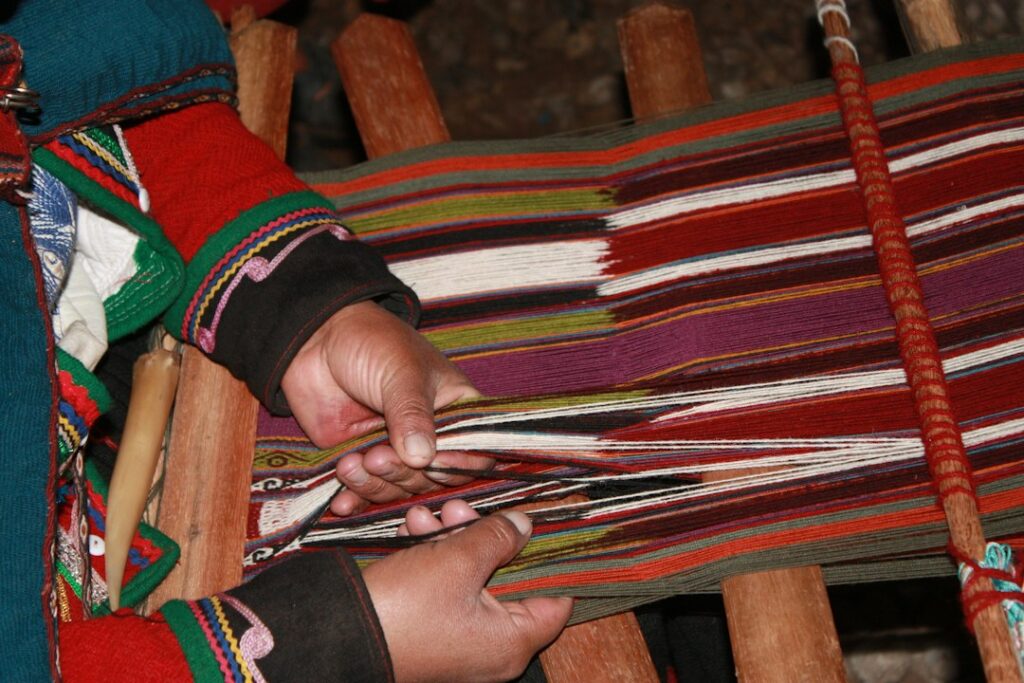
From weaving and embroidery to silk production, Georgia’s textile heritage is taking centre stage at a new event connecting artisans, students and designers.
Imagine learning to weave from someone who learned the craft from a mother or grandmother. Behind each careful movement is knowledge passed between generations: how to arrange threads, choose colours and build patterns that reflect a community’s history.
In Tbilisi, Georgia, those traditions are at the heart of Living Heritage Days 2026, an event taking place from October 22 to 24. The gathering brings artisans, students, researchers and international specialists together to explore how traditional textile skills can remain part of contemporary creative life.
Celebrating the hands behind the craft
Georgia’s weaving, carpet-making, embroidery, felt-making, silk production and natural dyeing traditions reflect the skills and identities of different regions. Their textiles have long served practical purposes while also expressing cultural meaning.
The event’s opening sessions examine Georgian textile history and its relationship with art and fashion today. Participants are considering how historic techniques can inform fresh designs without losing sight of the makers and communities who sustain them.
When tradition meets contemporary design
Preservation does not have to mean keeping a craft unchanged. A woven pattern might inspire a new garment, or natural dyeing techniques might offer contemporary designers different approaches to materials.
Living Heritage Days features contributions from Georgian and international specialists, including participants connected with Italy, the Netherlands, Azerbaijan, Germany and Uzbekistan. Discussions cover textile heritage, creative industries, design and sustainability.
Such exchanges create opportunities for students and artisans to share experience and explore future collaboration. They do not, by themselves, establish that new businesses or commercial partnerships have already emerged.
Learning through practical workshops
The event programme includes museum visits, presentations and hands-on activities involving traditional crafts and contemporary design. Workshops scheduled for October 24 had not yet concluded when this story was prepared on October 23.
Training in design, storytelling and entrepreneurship can help craftspeople consider how to develop products and communicate the meaning of their work. Sustained livelihoods, however, depend on more than a single event: continued instruction, access to markets and support for practitioners matter too.
Museums as places of active learning
Tbilisi’s State Silk Museum preserves important collections while also hosting practical heritage activities. Through the European ARACNE project, the museum has offered workshops connecting traditional sericulture and textile practices with contemporary learning.
A museum can be more than a place to view objects from the past. It can also provide space for people to experiment, practise skills and exchange ideas.
What has happened, and what remains ahead
The inaugural Living Heritage Days opened on October 22, 2026. Its published programme continues through October 24, with further exchanges and workshops planned.
The event and its early activities are documented. The long-term effects on employment, artisan income or the preservation of particular techniques have not yet been measured. These potential outcomes should be regarded as goals rather than results.
A new chapter for living heritage
Progress is often associated with new technologies and large investments. Yet preserving skills can be just as important to a community’s future. Traditional crafts carry practical expertise, memories and distinct ways of making things.
By bringing experienced makers together with students and designers, Living Heritage Days creates a space where that knowledge can be shared and explored.
Sometimes, preserving the past is also a way of creating new possibilities for the future.
Sources
UNESCO — Living Heritage Days 2026 programme; Tbilisi State Academy of Arts — event announcement; State Silk Museum — ARACNE workshops; Opening coverage — October 22.

