
What if unwanted eyeglasses could help reduce waste and widen access to vision care? For Canadian student Kobe Li, that question has become a youth-led mission with a growing public profile.
HAMILTON, CANADA — A pair of old eyeglasses can seem like a small thing. Yet frames and lenses that are no longer used raise two significant questions: how to avoid unnecessary waste, and how to make eye care more accessible to people who need it.
Kobe Li, 20, is addressing both issues through 20/20 Mission, an initiative that rethinks what happens to discarded eyewear.
A fresh perspective on discarded eyeglasses
Li is the founder and executive director of 20/20 Mission and a student in Integrated Biomedical Engineering and Health Sciences at McMaster University, according to the United Nations University Institute for Water, Environment and Health.
The initiative focuses on diverting glasses from landfill, supporting access to eye care in underserved communities, and encouraging young people to take part in research and action around the circular economy.
The United Nations University says the initiative has diverted thousands of glasses from landfill. It has not specified a precise audited figure in the cited announcement, so the number is best understood as the organization’s reported description rather than an independently verified total.
Recognized for environmental leadership
On October 28, 2026, the United Nations University announced its recognition of four Ontario young people for environmental leadership and innovation. Li was among them, with the university highlighting his work in extending the life cycle of eyewear while connecting environmental responsibility with community health.
That intersection is what makes 20/20 Mission distinctive. Reuse and recovery efforts can reduce material waste, but the larger social opportunity lies in matching usable resources with real needs through appropriate partners and safe, responsible processes.
Why this idea resonates
Eyeglasses are often taken for granted by people who already have access to vision care. For others, obtaining appropriate lenses and eye examinations can be a major challenge. Efforts aimed at improving access must account for proper prescriptions, fitting and professional oversight—not merely distributing used eyewear indiscriminately.
Li’s initiative demonstrates how environmental thinking can cross into another part of everyday life. The practical details matter, but so does the larger idea: items that appear to have reached the end of their useful life may still have value within a carefully designed recovery system.
The power of a practical question
Much of the attention surrounding environmental solutions focuses on major technologies or government policies. Young founders can also contribute by identifying overlooked sources of waste and developing partnerships to address them.
Kobe Li’s story is an example of that approach. His work is being recognized not because it claims to have solved the global challenge of accessible vision care, but because it connects a concrete waste problem with an opportunity to help others.
Sometimes positive change begins with seeing an ordinary object differently.
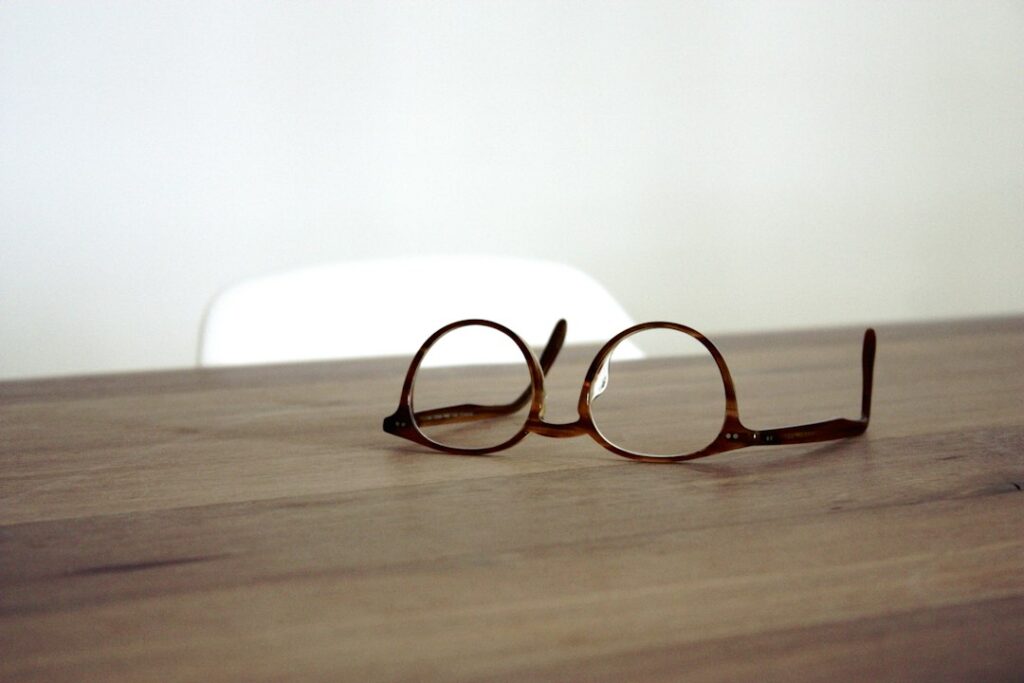
Editorial note: Impact figures are attributed to the announcing organization. Featured image: illustrative eyeglasses photograph by Dan Dimmock / Unsplash; it does not depict Kobe Li or 20/20 Mission.
Enjoy stories about people making a difference? Subscribe to the free NewsPositive newsletter for a weekly selection of constructive news.