
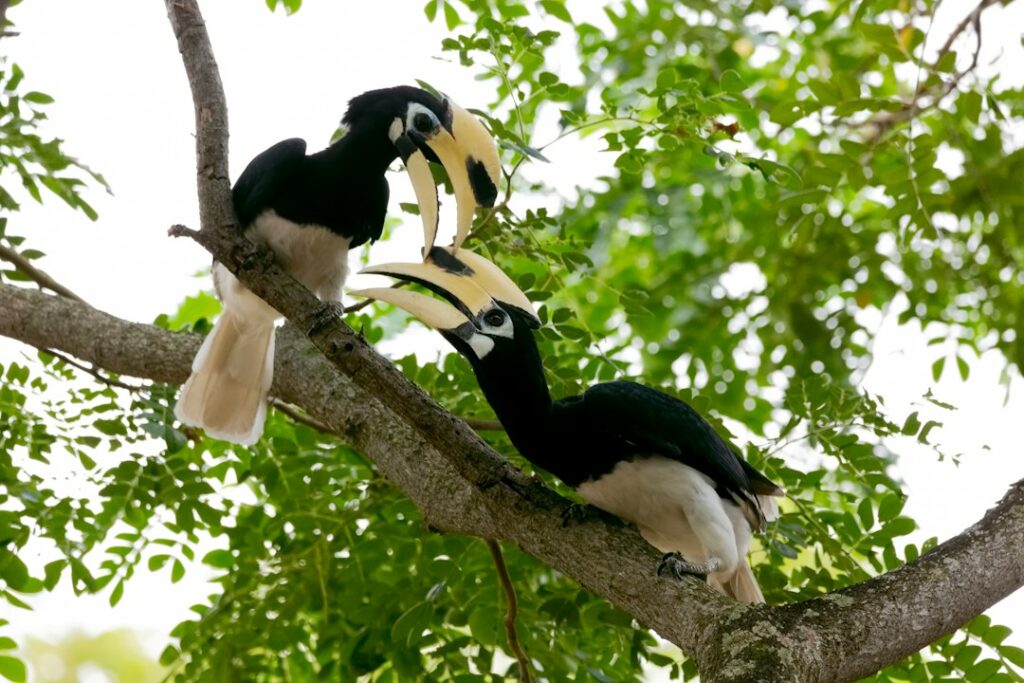
From a childhood encounter with hornbills to an international environmental award, Proud Tangkaravakoon is helping protect remarkable birds and encouraging other students to care for the forests around them.
THAILAND — One school field trip can change the direction of a young person’s life. For Proud (Yanin) Tangkaravakoon, an encounter with hornbills at Khao Yai National Park sparked a fascination that grew into a conservation project.
Now 17, Proud is the founder of Homes for Hornbills, an initiative combining artificial nests made with upcycled materials and environmental education for young people.
Why hornbills matter
Hornbills are distinctive tropical birds with impressive bills. Many are important seed dispersers, helping forests regenerate as they travel and feed. Habitat loss, deforestation and poaching threaten some hornbill species, making protection of nesting sites and habitats important conservation goals.
Creating places for birds to nest
According to The Earth Prize, Proud’s project has installed 26 artificial nests in southern Thailand, with 35 hornbill chicks reported to have fledged. The program works with conservation partners and uses repurposed materials in nest production.
These results are reported by the project and its award organizer; the figures do not establish the project’s impact on the entire hornbill population or prove that all fledging outcomes were caused by artificial nests alone.
Growing a new generation of guardians
Another part of Proud’s mission is the Young Hornbill Guardians education program. An organizer update published in September 2026 reports around 210 students from three elementary schools participating in activities about biodiversity and conservation.
Participants received a bilingual Thai-English nature journal, learned about plants that provide food for hornbills, and took part in photography and art activities connecting nature with community culture.
A young conservationist recognized internationally
In May 2026, Proud was named an Oceania and Southeast Asia regional winner of The Earth Prize and received $12,500 to help develop the project. The initiative also involves collaboration with the Thailand Hornbill Research Foundation and other partners.
Small actions, lasting possibilities
Protecting wildlife takes long-term habitat conservation, research and local cooperation. Artificial nests alone are not a substitute for healthy forests. But Proud’s work illustrates how a young person’s curiosity can become practical action — and how involving schoolchildren can help that action spread.
For NewsPositive, the story is not only about hornbills finding places to nest. It is about young people finding their own role in protecting the natural world.
Source: The Earth Prize: Proud Tangkaravakoon and Young Hornbill Guardians (September 2026).
Editorial note: Project figures are attributed to organizers and have not been independently audited. Featured image: Oriental hornbills photographed in Singapore by Mathew Schwartz / Unsplash; this is illustrative and does not depict birds from the project. A photograph of Proud or her project would require appropriate permission.