For Tala and Farah Mousa, rebuilding begins with an unexpected material: rubble. Their award-winning initiative is showing how young people can create practical opportunities even amid extraordinary hardship.
GAZA — After their family home was bombed, teenage sisters Tala and Farah Mousa looked for a constructive way to respond to the destruction around them. Their answer became Build Hope – Palestine, a project that repurposes building debris into reusable blocks for modest, non-structural applications.
Turning a difficult reality into a practical idea
The sisters’ concept uses processed rubble together with locally available binding materials to create blocks suitable for uses such as garden beds, paths and partitions. They are not presented as load-bearing building materials or as a replacement for professionally certified construction products.
Build Hope focuses as much on sharing knowledge as on producing blocks. Its founders want a technique that communities can learn and pass on, rather than a process dependent on expensive specialist equipment.
Young people teaching young people
According to a September 2026 update from The Earth Prize, a four-hour hands-on workshop involved more than 50 young people. Organizers reported that, through subsequent sharing of skills, more than 120 people across Gaza and the wider region had been trained in the method. These are program-reported participation figures, not independently audited construction outcomes.
The initiative was recognized in May 2026 when Tala, then 17, and Farah, then 15, were named The Earth Prize 2026 Middle East Regional Winners, receiving $12,500 to develop their work.
From a local initiative to an international audience
In October, the sisters appeared on CNN International to discuss Build Hope and their vision. The interview brought greater attention to an idea rooted in community participation and circular use of materials.
Recognition does not remove the severe challenges faced by people in Gaza, and a small recycling initiative cannot meet the enormous requirements of reconstruction. It does, however, offer a concrete example of young people exercising agency under difficult circumstances.
Why their story matters
At its heart, Build Hope is a story about inventiveness, shared skills and the willingness to turn an environmental problem into an opportunity for cooperation. By teaching others, the sisters are working to extend the value of their idea beyond their own team.
Hope is not a substitute for safe housing or reconstruction resources. But practical ideas, rooted in local knowledge and shared widely, can be one part of rebuilding community life.
Sources: The Earth Prize, October 26, 2026; The Earth Prize workshop report, September 2026.
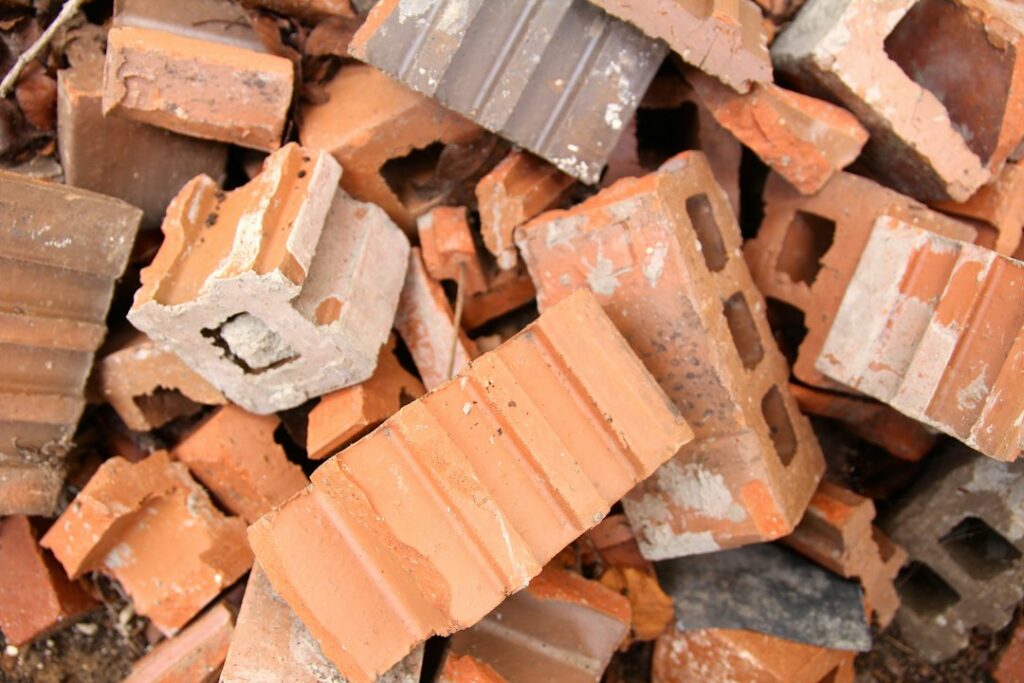
Editorial note: Materials are reported as non-load-bearing. Project results are attributed to the organizers. Featured image: illustrative photograph of demolished bricks by Hal Gatewood / Unsplash; it does not show Gaza or the Build Hope project. Any photograph identifying the teenage founders should be used only with appropriate publication rights and consent.