
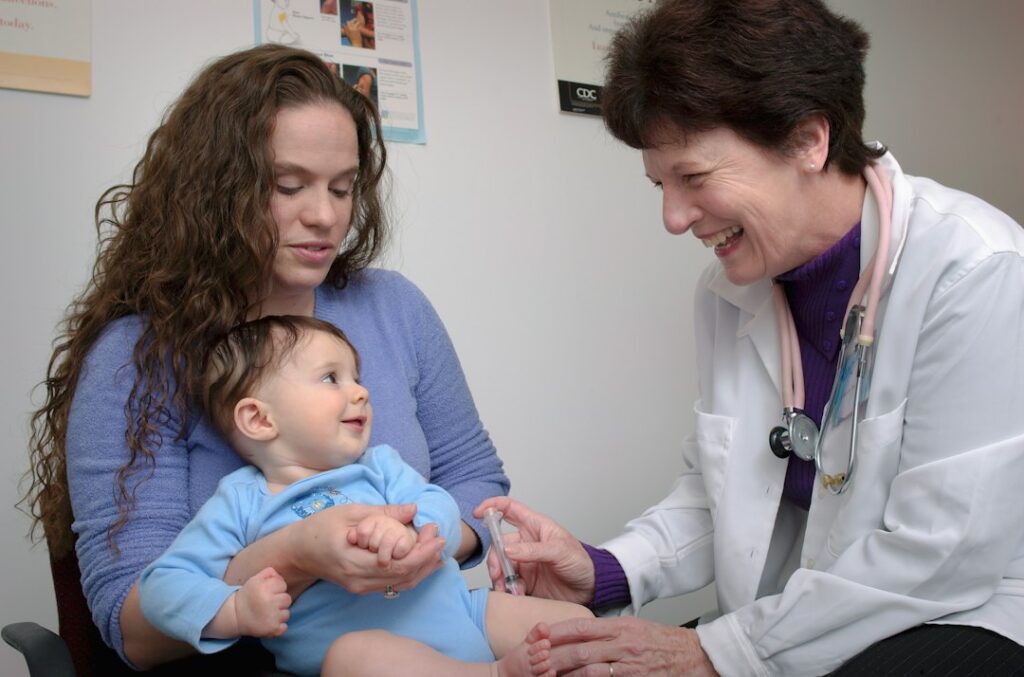
Behind every vaccination is a child, a family and the possibility of a healthier future. New global health figures show those opportunities reaching more children than ever before through Gavi-supported programmes.
For millions of parents, a routine childhood vaccination is a small moment with enormous meaning. A child sits beside a caregiver. A healthcare worker prepares a vaccine. And another family gains protection against an illness that could otherwise cause serious harm.
Multiply that moment millions of times across communities and countries, and an extraordinary story of progress emerges. According to Gavi’s 2025 Annual Progress Report, more than 73 million children received routine vaccinations with Gavi support in 2025 — the highest annual total in the alliance’s history.
The report also estimates that vaccinations supported during the year will avert more than 2.2 million future deaths from vaccine-preventable diseases. Published in October 2026, the results offer an encouraging example of what sustained investment in children’s health can achieve.
A record year for protecting children
Gavi works alongside national governments, the World Health Organization, UNICEF and other partners to expand access to vaccines, especially in lower-income countries. Between 2021 and 2025, more than 351 million children received routine vaccinations with Gavi support, exceeding the five-year target of 300 million.
Since Gavi’s establishment in 2000, supported programmes have helped immunise more than 1.3 billion children through routine services. Its annual count measures unique children who received the last recommended dose of at least one Gavi-supported routine vaccine; it does not include vaccination campaigns.
Behind these figures are protections against illnesses such as measles, rotavirus diarrhoea and pneumonia-causing infections. For families, preventing disease can mean fewer hospital visits and more opportunities for children to grow up healthy.
Why the estimate of 2.2 million lives matters
Using estimates from the Vaccine Impact Modelling Consortium, Gavi reports that vaccinations supported in 2025 are projected to avert more than 2.2 million future deaths — its highest estimated annual total.
The distinction matters: these are modelled projections of deaths avoided over time, not a directly observed count of deaths prevented in 2025. Across the 2021–2025 period, Gavi-supported vaccinations are estimated to avert more than 7.8 million future deaths.
Reaching children who have been left behind
Another encouraging finding concerns children who have previously missed routine vaccination. Among 57 lower-income countries in Gavi’s reporting, there were approximately 9.5 million zero-dose infants in 2025 — around 600,000 fewer than in 2024.
Zero-dose refers here to infants who did not receive a first dose of a routine diphtheria, tetanus and pertussis-containing vaccine in their first year of life. The reduction is progress, but millions of children still lack basic protection.
WHO and UNICEF’s July 2026 global assessment similarly underscored the continuing challenge of reaching children missed by routine services. Global and Gavi-supported-country figures describe different populations and should not be directly compared.
Countries are investing in their own progress
Countries supported by Gavi collectively contributed approximately US$301 million towards their vaccine programmes in 2025, their highest annual co-financing amount on record. Gavi also reports that 56 vaccine programmes originally introduced with its funding were self-financed by countries as of 2025.
These commitments matter because lasting public-health gains depend not only on international partnerships, but also on resilient national health systems and reliable funding.
A healthier future is built together
The progress reflects years of work by healthcare professionals, governments, community organisations, researchers and families. Serious obstacles remain, including conflict, displacement and funding pressures. But the latest results show that cooperation is helping protect more children.
For a parent, the value of vaccination is not measured in millions. It is measured in the health of one child. And in 2025, millions more children had that opportunity.
That is progress worth celebrating — and protecting.
Sources
- Gavi — 2025 Annual Progress Report (October 8, 2026)
- Gavi — 2025 programme results announcement
- WHO / UNICEF — Global immunisation coverage update (July 2026)
Illustrative featured photo: CDC via Unsplash; not a photograph of a specific Gavi-supported vaccination programme.