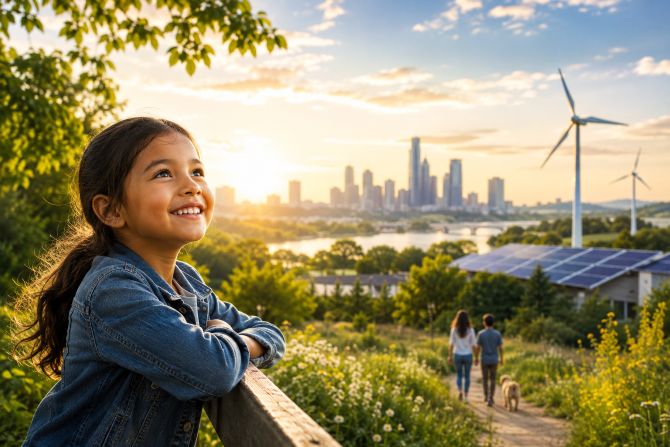
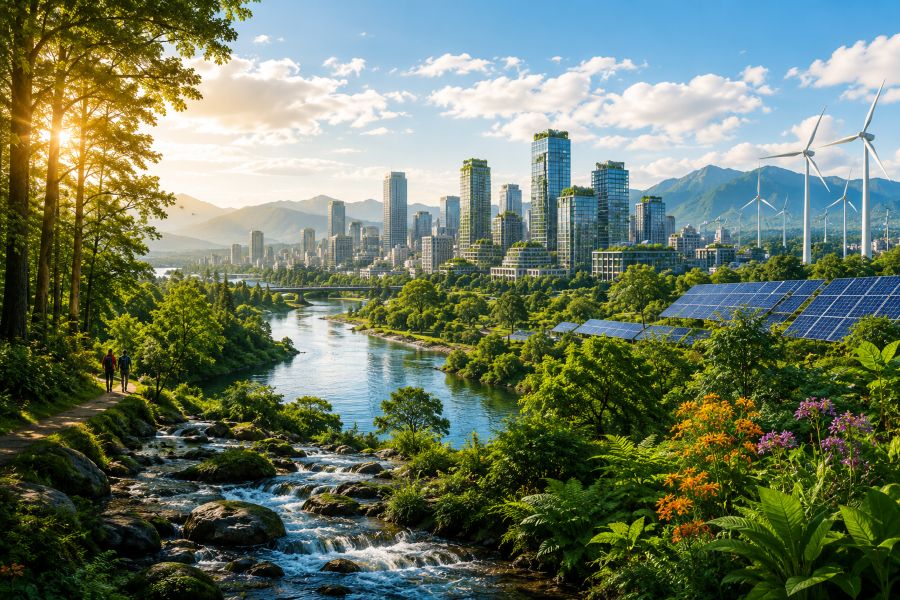
Discover inspiring examples of countries and cities restoring forests, expanding renewable energy and creating greener places for future generations.
When we think about the environment, it’s easy to focus on what has been lost.
Forests have disappeared. Cities have expanded. Wildlife habitats have been damaged. Pollution remains a serious challenge in many parts of the world.
But another story is unfolding at the same time.
Across the planet, countries and communities are restoring forests, cleaning rivers, expanding renewable energy, creating greener cities and giving nature space to return.
The transformation isn’t complete, and progress isn’t happening everywhere at the same speed. But some places look noticeably greener than they did a generation ago.
Here are some encouraging examples of what can happen when environmental recovery becomes a long-term priority.
1. Costa Rica – Bringing the Forest Back
Costa Rica has become one of the best-known examples of forest recovery.
After decades of significant deforestation during the 20th century, the country changed direction. Forest protection, conservation programs, protected areas and incentives for landowners helped trees return across large areas.
Today, lush forests are once again one of Costa Rica’s defining characteristics.
It’s an important reminder that deforestation doesn’t always have to be permanent.
2. Denmark – Building a Cleaner Energy Future
Denmark has spent decades expanding wind power and rethinking how communities produce and use energy.
Wind turbines are now a familiar part of the Danish landscape, while cities such as Copenhagen have invested heavily in cycling infrastructure, public transportation and energy efficiency.
The transformation didn’t happen overnight.
It came from thousands of decisions made over many years — exactly how lasting change often happens.
3. Portugal – Giving Renewable Energy a Bigger Role
Portugal has dramatically expanded renewable electricity, particularly through wind, solar and hydropower.
At the same time, communities are experimenting with forest restoration, ecosystem protection and more sustainable approaches to managing landscapes.
Challenges remain, including destructive wildfires.
But Portugal demonstrates how quickly a country’s energy landscape can evolve when cleaner alternatives receive sustained investment.
4. Singapore – Bringing Nature Into the City
Few places demonstrate urban greening quite like Singapore.
Trees line streets. Gardens climb buildings. Parks connect neighbourhoods. Green roofs and vertical gardens have become increasingly visible across the city-state.
Rather than treating nature and cities as opposites, Singapore has increasingly tried to integrate the two.
The result offers an intriguing glimpse of what densely populated cities can become when greenery is treated as infrastructure rather than decoration.
5. China – Restoring Green Landscapes on an Enormous Scale
China has undertaken some of the world’s largest tree-planting and land-restoration programs.
The country still faces major environmental challenges, but enormous areas have also been targeted for reforestation, desertification control and ecological restoration.
Large-scale projects aren’t perfect substitutes for natural ecosystems, but they demonstrate something important:
Landscapes damaged over generations can still become the focus of ambitious recovery efforts.
6. New Zealand – Protecting What Makes the Country Unique
New Zealand’s extraordinary ecosystems contain plants and animals found nowhere else.
Conservation projects across the country are working to restore native habitats and protect vulnerable wildlife.
Communities, volunteers and conservation organizations are also involved in restoring wetlands, forests and coastal environments.
Sometimes becoming greener isn’t about creating something new.
It’s about protecting and rebuilding what was already there.
7. Cities Everywhere Are Joining the Transformation
Perhaps the biggest change isn’t limited to one country.
It’s happening inside cities.
Paris has been creating more pedestrian-friendly and green spaces.
Cities around the world are planting trees to reduce heat.
Former industrial areas are becoming parks.
Rivers once hidden beneath concrete are being rediscovered.
Rooftops are becoming gardens.
Empty lots are becoming community growing spaces.
Slowly, the definition of a modern city is changing.
A Greener Future Isn’t Built in One Day
Environmental progress is rarely a straight line.
Countries can restore forests while still struggling with pollution. Cities can create parks while continuing to face traffic problems. Renewable energy can expand while fossil fuels remain part of the energy system.
Progress and problems can exist simultaneously.
That’s why looking at the longer story matters.
Twenty years can transform a neighborhood.
Fifty years can transform a forest.
And decisions being made today can shape landscapes that people won’t fully experience for generations.
Perhaps the most encouraging lesson is this:
Nature can recover when people give it the opportunity.
Forests can return.
Rivers can become cleaner.
Wildlife can come back.
Cities can become greener.
And places damaged in the past don’t necessarily have to remain that way forever.
That’s a future worth building.